From shunting systems to generative AI: This is what CEMS students tackled in their Business Projects 2026
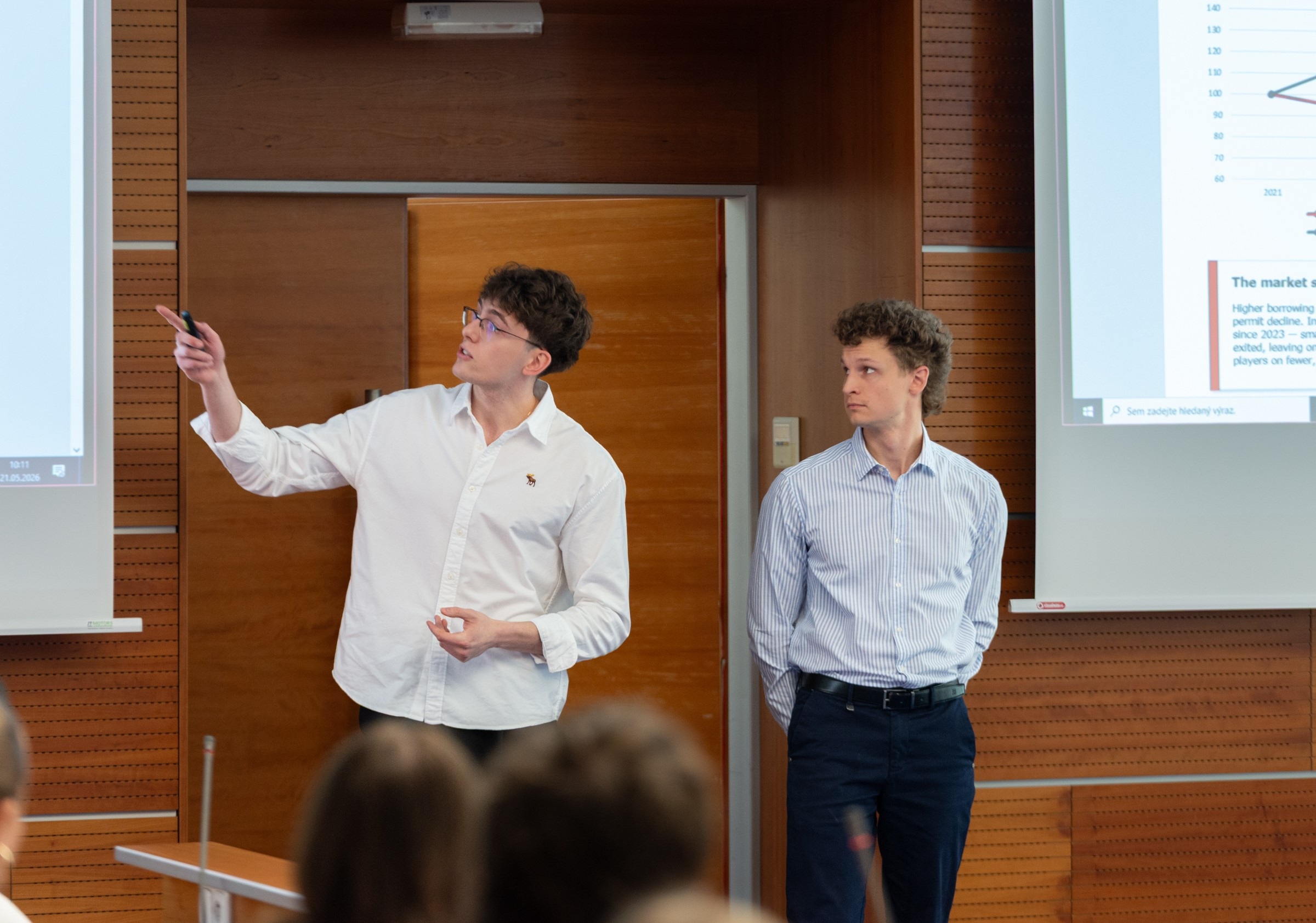
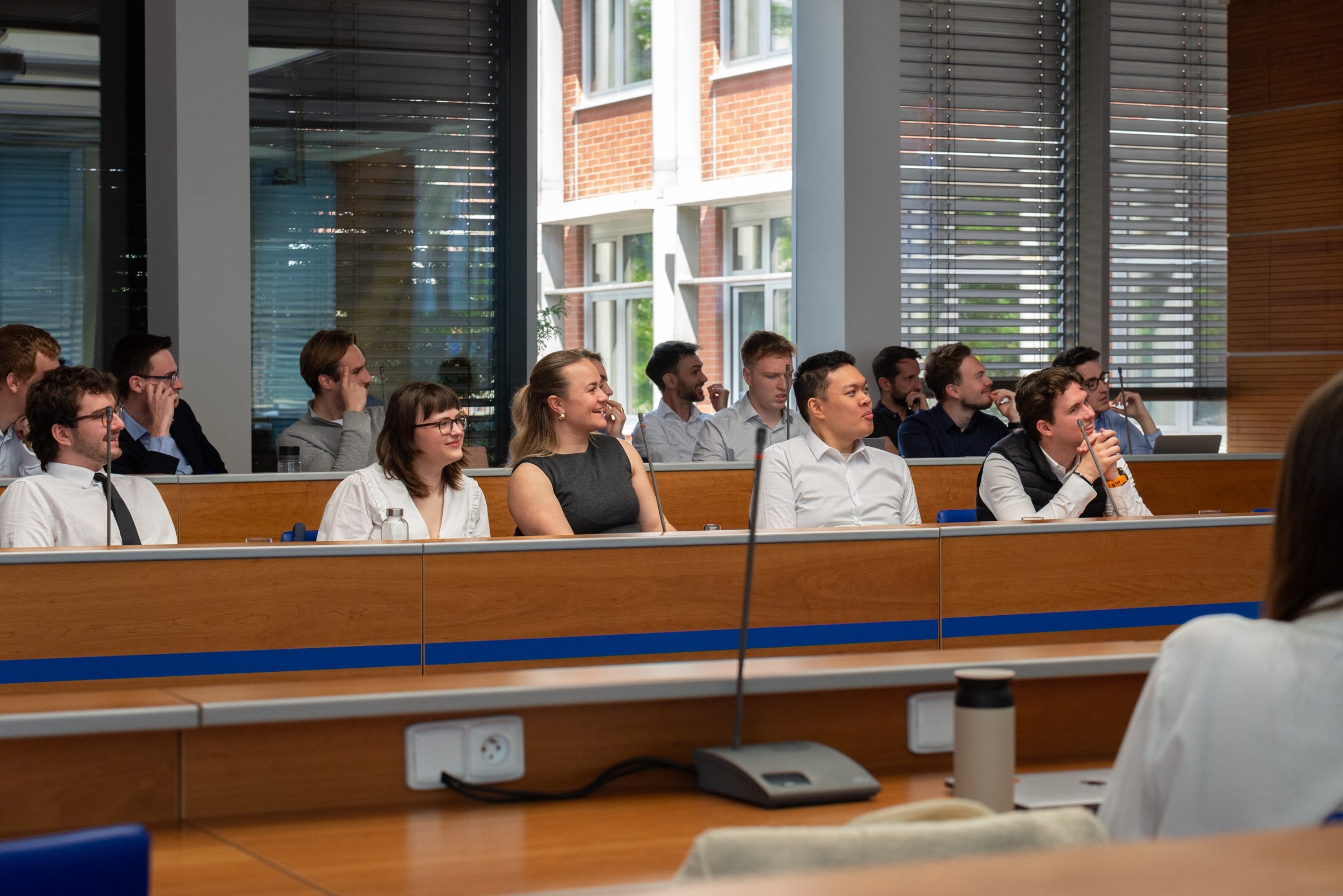
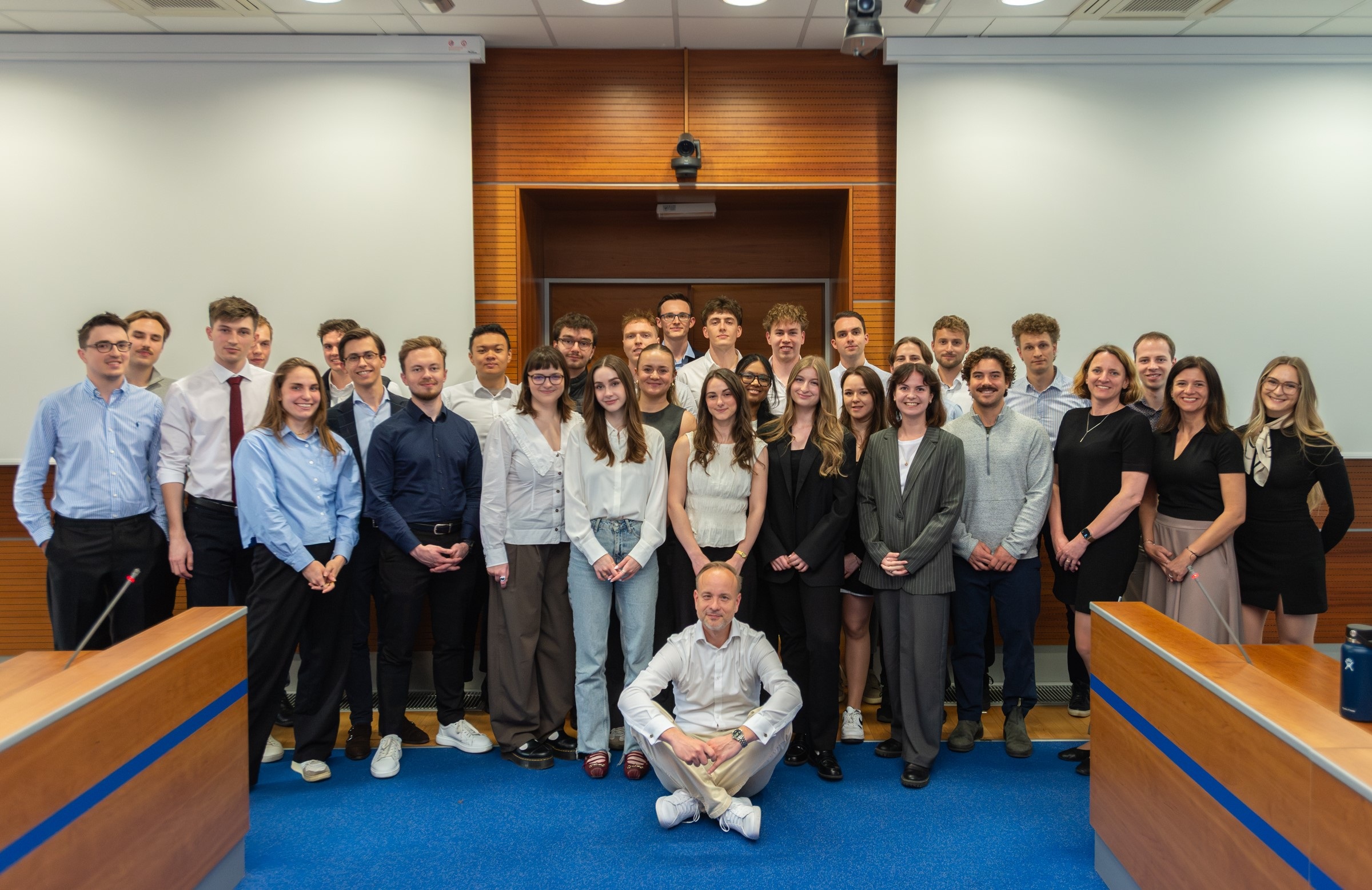
Seven corporate partners. Seven real strategic challenges. One semester to crack them. Each year, CEMS/MIM students at Prague University of Economics and Business spend the spring semester working side by side with leading companies on business projects that go far beyond the classroom. The results were presented at the end-of-semester finale, and here is a look at what the teams delivered this year.
CEMS Business Projects 2026 were:
- Hilti: Increase sales per account manager via trade specific initiatives (cross-border project with Corvinus University Budapest and Warsaw School of Economics)
- Unibail-Rodamco-Westfield: New Business strategy for Westfield Rise – How to navigate the agency environment in Czechia and Slovakia and increase market share
- Plzeňský Prazdroj: From NAB to NAD: How Can a Brewer Win New Drinking Occasions Without Cannibalising Beer
- Škoda Auto: Potential and Risk of Using Generative AI in Marketing Communication
- L’Oréal: E-commerce Acceleration of Beauty Business
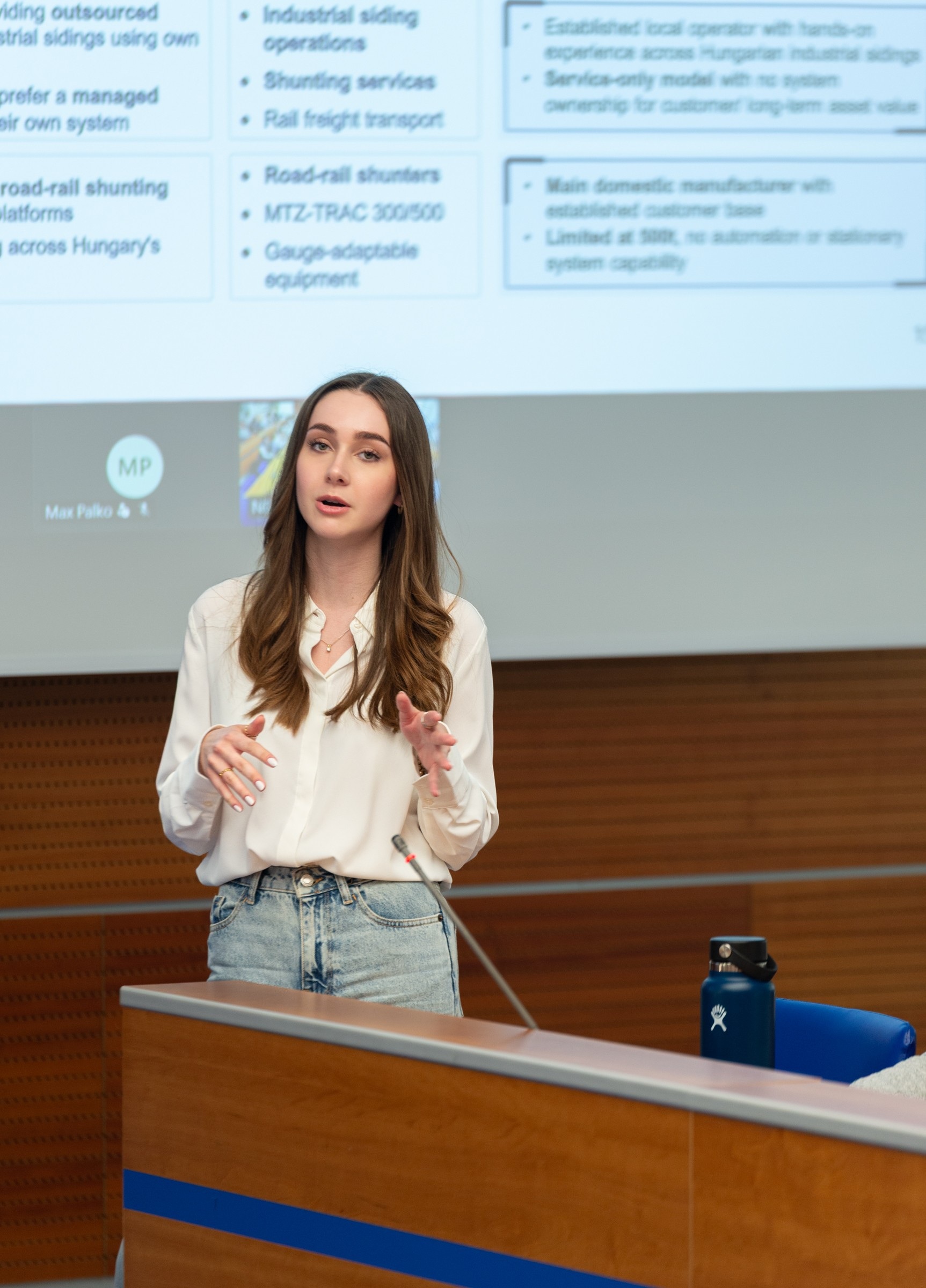
- PKD Holding: Business strategy in the Czech Republic, Slovakia, Poland, and Hungary for shunting systems
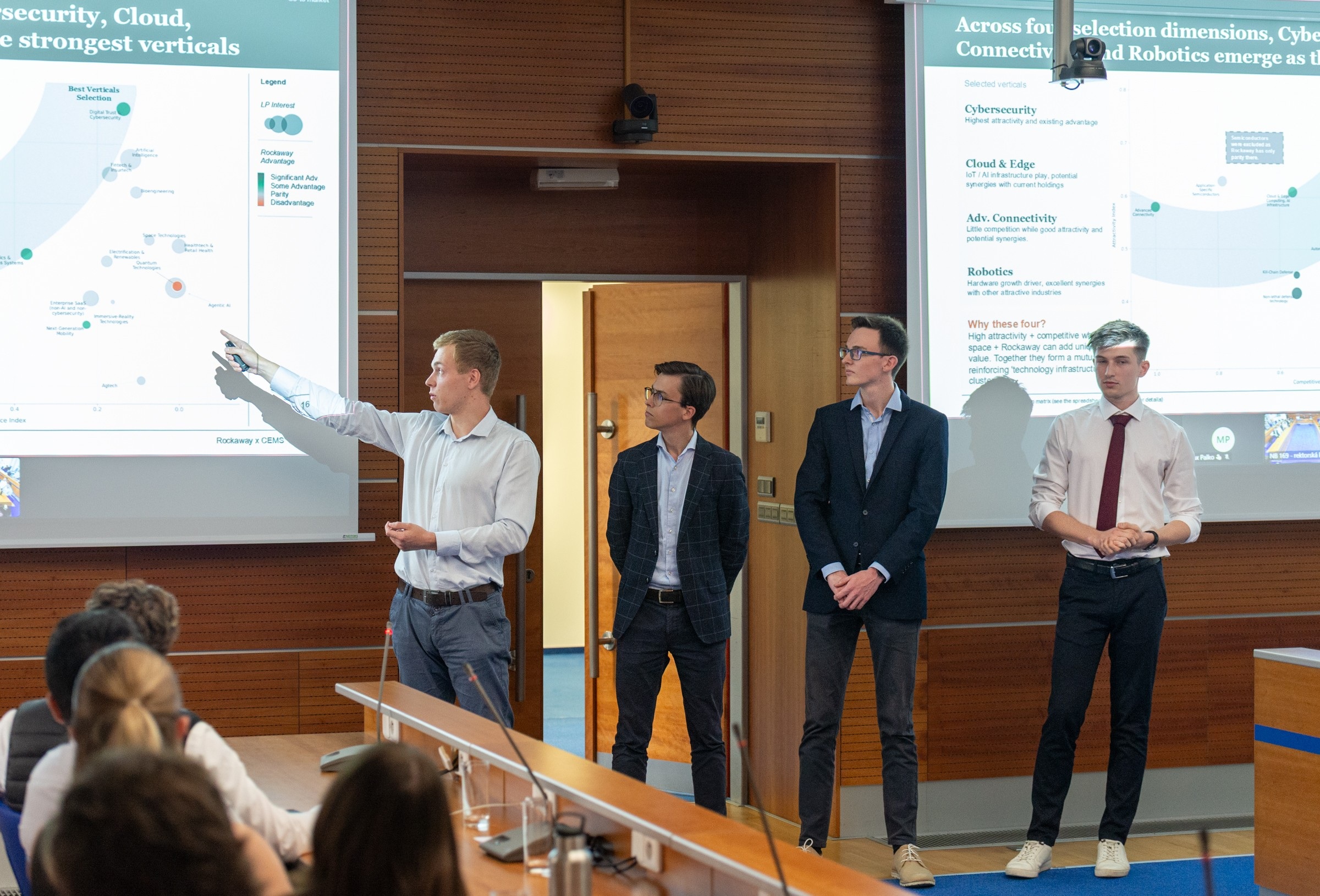
- Rockaway: Building NextGen Tech Fund in the Heart of Europe


Hilti: Increase Sales per Account Manager via Trade Specific Initiatives
This cross-border project — carried out in collaboration with students from Corvinus University Budapest and Warsaw School of Economics — challenged a team of six to take a hard look at Hilti’s sales process across four Eastern European markets: Czech Republic, Slovakia, Hungary, and Poland. Students analysed the current approach to a specific targeted trade, benchmarked best practices from other Hilti regions and leading companies, and proposed a systematic, regionally coordinated initiative to increase daily sales per account manager. The project had to grapple with real-world complexity: inconsistent sales practices across markets, differences in construction sector dynamics, and varying pricing and support structures — making standardisation both necessary and challenging.
“The team invested significant effort into understanding our business and identifying the root causes before proposing any solutions. I particularly appreciated that they built on existing processes instead of trying to reinvent everything, resulting in a pragmatic and realistic proposal. Their thorough analysis and structured approach made their recommendations highly relevant and provided valuable inspiration for further discussions within our team.” Gabor Rajnay, Regional Head of Trade Marketing.
Unibail-Rodamco-Westfield: New Business Strategy for Westfield Rise
Westfield Rise — the in-house retail media agency of Unibail-Rodamco-Westfield — covers three shopping destinations in Prague and one in Bratislava, attracting a combined 46 million visitors per year. Yet retail media remains underrepresented in agency-led media plans. Students were tasked with mapping the Czech and Slovak media agency landscape, diagnosing why Westfield Rise’s offering is often overlooked, and designing a clear agency engagement and partnership model. The project involved interviewing key decision-makers across ten major brands to understand their needs and decision-making dynamics, and culminated in a go-to-market plan and a five-year financial model of additional revenue streams.
„Students quickly immersed themselves in the process and demonstrated a strong sense of ownership, as if they were part of the company. They showed high engagement, curiosity, and a hands-on approach throughout the project. Despite the limited timeframe, the research conducted was in-depth and well-structured. The valuable feedback gathered from agencies has encouraged our team to further tailor our models to market needs. Their innovative recommendations will help shape the next steps,” said Ksenia Strapatá, Senior Investment Manager at Unibail-Rodamco Česká republika.
Plzeňský Prazdroj: From NAB to NAD
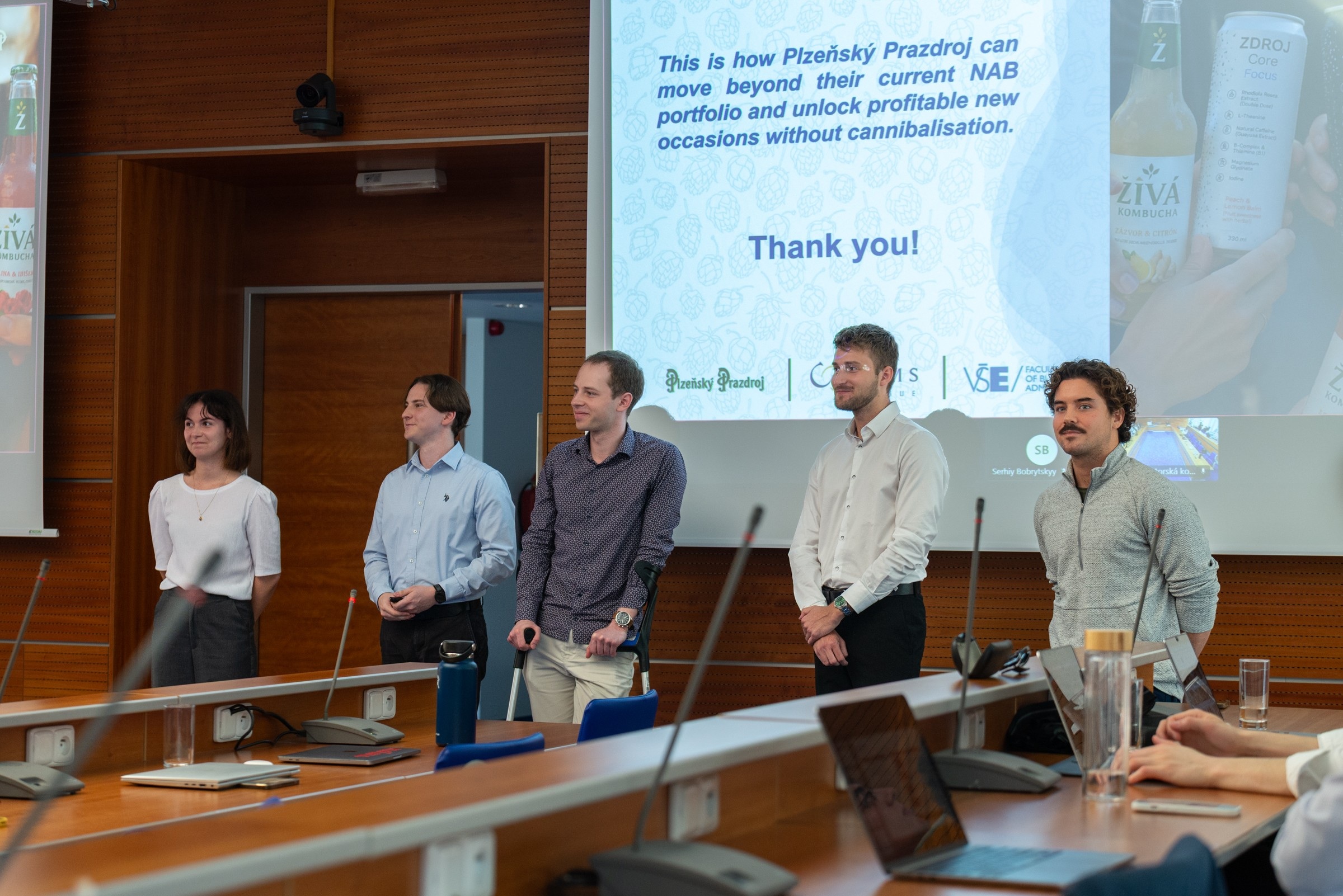
With per capita beer consumption declining across Europe and consumer lifestyles shifting, Plzeňský Prazdroj posed a bold question to students: how can a brewer move beyond non-alcoholic beer — which largely substitutes for traditional beer — into the broader No- & Low-Alcohol Drinks (NAD) space, capturing entirely new occasions without eating into its core portfolio? Students mapped consumer need-states and drinking occasions where beer is currently absent, assessed the strategic and financial attractiveness of the NAD segment, and developed portfolio expansion options. A key part of the challenge was building guardrails against cannibalisation while making the business case for sustainable, profitable growth.
“I just want to bring big, big credit to the team because you can’t imagine what a huge amount of work they’ve done! They analyzed roughly 20 categories in detail with multiple and complex criteria, involving company aspects, current market situation, structure, and of course the future perspective of those categories. Therefore, it took a lot of time to conduct this analysis, and they did it very well. They used very well-defined methodology and criteria to do that, so they ended up with four categories to go for. But then again, it’s a difficult job to understand what consumers are actually looking for, what they’re going to bring in the future, and what are the trends which are going to achieve that. So again, the team did a very good job and I believe both of the proposed drinks can have potential and follow the nowadays trends in terms of both design and functional aspects. Congratulations,” said Radek Záhorovský who is Senior Finance Business Partner for Czechia, Germany and Austria at Plzeňský Prazdroj.
Škoda Auto: Potential and Risk of Using Generative AI in Marketing Communication
Generative AI is reshaping how brands create content, personalise messaging, and engage customers — but for a global automotive manufacturer, getting it wrong carries real reputational and legal risks. Škoda Auto challenged students to deliver both sides of the picture: a thorough analysis of how generative AI can enhance marketing communication through content creation, personalisation, and customer engagement, alongside a rigorous assessment of the risks — from brand consistency and data privacy to misinformation and regulatory compliance. Students also benchmarked how competitors in the automotive industry are approaching AI adoption. The result was a strategic report, a risk management framework, and actionable recommendations for Škoda Auto’s AI integration roadmap.
“We know Generative AI is going to massively change the world of marketing. But getting it right requires finding the right balance between meaningful innovation and potential risk. What I loved about working with students is that they didn’t just get caught up in the tech hype. They focused heavily on how we can use these new tools responsibly without losing our brand’s voice or human touch. The framework and roadmap they handed over gave our team some really practical, fresh perspectives to think about,” commented Zuzana Varyšová, Brand and Product Communication at Škoda Auto.
L’Oréal: E-commerce Acceleration of Beauty Business
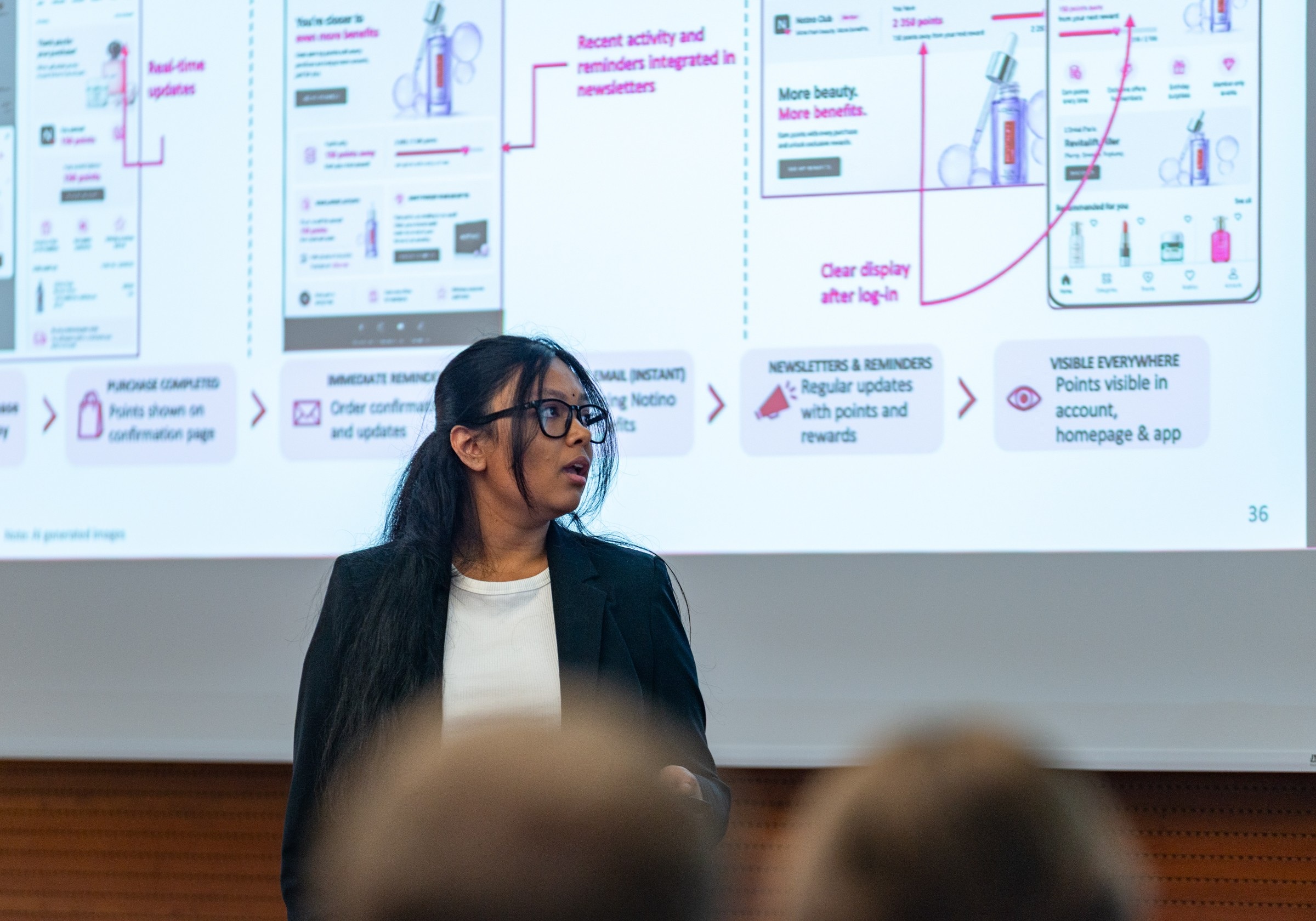
In a highly competitive beauty e-commerce landscape, loyalty is not enough — brands need customers who buy more products, more often. L’Oréal challenged students to find concrete ways to accelerate e-commerce growth by diving deep into the ecosystems of its top European retail partners. Students analysed loyalty programmes across leading beauty e-retailers, compared their tools and approaches, and prepared a brand activation plan for a specific customer loyalty club. They also explored the emerging world of agentic shopping — where AI plays a central role in consumer decisions — and examined how leading European retailers are already integrating it. The project combined data analysis, digital marketing strategy, and original research, including hands-on interactions with e-commerce clients.
„It was a pleasure to work with CEMS students on this Business project. I appreciate their passion, drive to achieve and professionalism,” says Mária Sochorová, Ecommerce Director for Czechia Hungary and Slovakia.
PKD Holding: Business Strategy for Shunting Systems in Central and Eastern Europe
Vollert, a member of PKD Holding and a technology leader in shunting and material handling systems, challenged students to map commercial opportunities for its solutions across four CEE markets: Czech Republic, Poland, Hungary, and Slovakia. Students had to identify the most relevant industrial sectors and application areas, analyse customer decision-making and investment drivers, estimate market size and attractiveness country by country, and ultimately propose the ACE Strategy: a prioritised set of business opportunities and concrete next steps for Vollert’s regional expansion. To go beyond publicly available data, the team conducted expert interviews to surface insights from practitioners directly.
“The team demonstrated a highly professional, structured, analytical approach in assessing the market attractiveness for shunting systems produced by Vollert Heavy Duty Solutions GmbH across Poland, the Czech Republic, Hungary, and Slovakia. We particularly value the depth of their research, their ability to identify relevant industry segments, potential customers and competitors, as well as the creativity and strategic thinking reflected in their proposed ACE Strategy. Their work went far beyond a standard academic assignment and delivered practical, well-founded recommendations with real business relevance. We also highly appreciate the effort they invested in conducting expert interviews and gathering valuable market insights that are not publicly available. The team’s final output provides a strong basis for business development in the region,” acknowledged CFO at PKG Holding’s JLF GROUP a.s. Hana Valešová.
Rockaway: Building NextGen Tech Fund in the Heart of Europe
Central and Eastern Europe is home to world-class engineering talent and a high density of bootstrapped technology companies — yet the region remains significantly undercapitalised at the growth and private equity stages compared to Western Europe. Rockaway challenged students to design a next-generation technology-focused fund built for CEE’s unique dynamics. The team benchmarked European VC, growth equity, and tech PE funds, mapped typical paths and exit routes for CEE tech companies, and developed a data-driven investment thesis covering fund positioning, target sectors, geography, and investment stages. They also built a full financial model simulating various exit scenarios and prepared sector deep dives to validate the strategy — all packaged as a professional investment memorandum ready for presentation to prospective limited partners.
“The students were given a difficult and complex task. In a short time, they learned quickly, handled many different areas, and completed the assignment well. I believe they gained valuable experience of how such projects work in practice,” said Max Palko, Principal at Rockway Ventures.